VoIP Quality Secrets Revealed: What Most Internet Providers Don’t Want You to Know
By Dylan Banks

VoIP quality for an insurance agency is the measure of how clear, stable, and reliable your voice calls are over an internet connection. It is determined by the consistency of your network traffic, specifically focusing on low latency and minimal jitter rather than just raw download speed. If your network is not configured to prioritize voice packets, even the fastest "Gigabit" connection will result in dropped calls and robotic audio.
As a SF agent, your phone is your lifeline If dropped calls are just one symptom of a bigger phone problem, see our related guide: Death to the 800 Number: Why Your Agency Needs a Direct Line to IT.. When a client calls to report a claim or ask for a quote, the last thing you need is a "can you hear me now?" moment. Most Internet Service Providers (ISPs) sell you on speed, 300 Mbps, 500 Mbps, or the coveted 1 Gbps. They hope you don’t ask about the technical metrics that actually matter for your phones.
I’m Dylan Banks, and I’m going to show you what your ISP isn't telling you. We’re going to look at the metrics that actually drive call quality and why your current "fast" internet might be failing you.
What is the secret to high-quality VoIP?
The secret to high-quality VoIP is prioritizing network stability and packet timing over raw bandwidth. While high speeds are great for downloading large files, voice calls only require about 100 kbps of bandwidth; they demand that those small bits of data arrive in a perfect, rhythmic sequence without delay.
Most agents assume that if their internet is fast enough to stream 4K video, it’s fast enough for a clear phone call. This is a myth. Streaming video uses "buffering", your computer downloads the next few minutes of the show in advance. If the connection hiccups for a second, you never notice.
VoIP is real-time. There is no buffer. If a voice packet is delayed by even a fraction of a second, it’s useless. The result? "Robotic" voices, words cutting out, or calls dropping entirely. To fix this, you need a network that understands the difference between a YouTube video and a client call.
Why does my "Gigabit" internet still have choppy calls?
Choppy calls occur on fast connections because of high jitter and latency, which represent the "traffic jams" and "detours" your data takes on the way to your VoIP provider. A 1,000 Mbps connection with high jitter will always sound worse than a stable 50 Mbps connection with low latency.

There are three metrics you need to watch:
- Latency: The time it takes for data to travel from your office to the server and back. According to industry standards, anything over 150ms starts to feel like a satellite call with awkward pauses.
- Jitter: This is the variation in that delay. If one packet takes 20ms and the next takes 100ms, your phone can't reassemble the audio smoothly. You want jitter to stay under 30ms.
- Packet Loss: This is when bits of data simply disappear. Even 1% packet loss can make a conversation frustrating.
ISPs rarely guarantee these numbers in their marketing. They promise "up to" a certain speed, but they don't promise that your packets will arrive on time. At Agent Choice Internet, we look at how it works by monitoring these metrics 24/7. We don't just care that your internet is "on"; we care that it's performing.
Can QoS (Quality of Service) fix a bad internet connection?
Quality of Service (QoS) cannot fix a fundamentally broken or oversubscribed internet circuit, but it is essential for managing how your local hardware handles competing traffic. It acts as a "HOV lane" for your voice packets, ensuring they jump to the front of the line ahead of less important data like software updates or cloud backups.
If you have a cheap, consumer-grade router, it treats all traffic the same. When your assistant starts uploading a large batch of photos to a claim file, the router treats those photos with the same priority as your active phone call. The result is "bufferbloat," where your voice packets get stuck behind the photo upload.
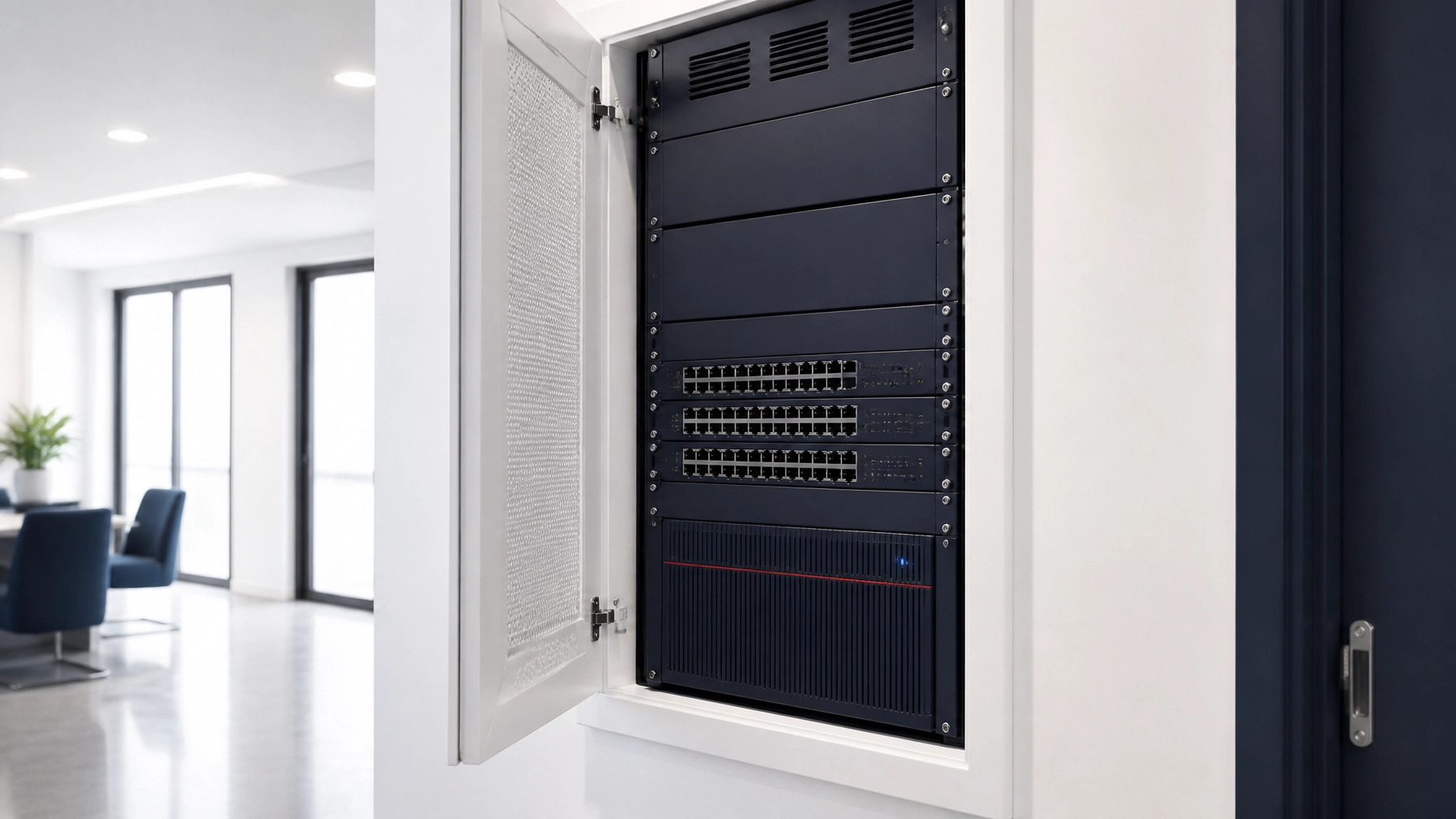
With our managed solutions, we use enterprise-grade UniFi hardware that supports advanced QoS features. We configure your network to recognize voice traffic and give it absolute priority. This ensures that even if the office is busy, your phones stay crystal clear.
How can I ensure my agency’s phones never drop?
You can ensure reliable phone service by using wired Ethernet connections for all desk phones, selecting an ISP with a solid Service Level Agreement (SLA), and utilizing managed hardware that monitors network health in real-time. Relying on office Wi-Fi for VoIP is the most common cause of avoidable call quality issues.
Here is a simple, 3-step checklist to stabilize your office phones:
- Kill the Wi-Fi Dependency: Wi-Fi is prone to interference from microwaves, neighboring offices, and physical walls. This creates massive jitter. Always plug your phones into a physical wall jack.
- Monitor Your Circuit: Don't take the ISP's word for it. We use remote monitoring tools to track your connection's health. If your latency spikes every day at 3:00 PM, we have the data to hold the ISP accountable.
- Check for Compliance: The FCC requires interconnected VoIP providers to meet specific 911 and consumer protection standards. Make sure your network setup doesn't interfere with these critical safety features.
Why Managed Hardware is the Game Changer
Most SF agents are busy selling policies and managing teams. They don't have time to log into a router to check for "packet tagging" or "DSCP markings." This is why a "done-for-you" model is the only way to go.
When you look at our pricing, you’ll see that we include all the hardware. We don't just ship you a box; we install it, configure it specifically for VoIP, and manage it forever. If your phone quality dips, our team likely already knows it and is working with the ISP to resolve it before you even notice.
We use UniFi’s "Smart Queues" and specialized traffic shaping to prevent any single device in your office from hogging the bandwidth. It’s about creating a balanced environment where the most important tasks, your calls, always have the resources they need.
The Bottom Line for SF Agents
You shouldn't have to be an IT expert to have clear phone calls. You shouldn't have to argue with your ISP about why your "Gigabit" internet is failing your VoIP system.
Stop settling for "best effort" internet. Transition to a network that is built specifically for the needs of a modern insurance agency. We handle the ISP research, the hardware installation, and the ongoing management so you can get back to what you do best: protecting your clients.
Ready to fix your phones for good? Get started today and let us take the IT burden off your plate.

What is Jitter and how does it affect my VoIP calls?
Jitter is the variation in the time it takes for data packets to arrive; high jitter causes robotic voices and audio dropouts because the phone cannot reassemble the sound smoothly.
Is 100 Mbps enough for a 10-person office?
Yes, 100 Mbps is more than enough bandwidth for VoIP, as each call only uses about 0.1 Mbps; however, the connection must be stable and prioritized using QoS to ensure quality.
Why shouldn’t I use Wi-Fi for my office desk phones?
Wi-Fi is susceptible to radio interference and physical obstructions, which creates inconsistent packet delivery (jitter) that ruins VoIP call quality.
Does Agent Choice Internet fix my existing internet?
We manage your internet by installing commercial-grade hardware that prioritizes your traffic and by monitoring your ISP’s performance to ensure they are delivering the stability you pay for.
What is the maximum latency for a clear VoIP call?
For a natural-sounding conversation, one-way latency should be kept under 150 milliseconds; anything higher results in noticeable delays and people talking over each other.
Related reading: Looking for Backup Internet? 5 Things Every SF Agent Should Know About 5G Failover.