
How to Choose the Best Business Internet Service Provider for Your State Farm Office
By Dylan Banks

In short: The best business internet provider for a State Farm office is the one that balances reliability, responsive support, and the right speed tier for your tools — not just the lowest advertised price. The FCC broadband Q&A covers the fundamentals; this guide turns them into an agent-specific checklist.
Choosing an Internet Service Provider (ISP) used to be a corporate decision. Now, it’s yours.
As a State Farm agent, you are transitioning to a self-managed internet model. This shift gives you freedom, but it also hands you a massive technical burden. You are now responsible for uptime, security, and hardware management.
Your agency runs on the cloud. Quoting, document scanning, and VoIP phone systems demand a flawless connection. If your internet drops, your revenue stops.
This guide breaks down the three main types of business internet. We’ll show you how to choose the right one, how to maximize your State Farm stipend, and why the provider is only half the battle.
Fiber: The Gold Standard for Modern Agencies
Fiber optic internet is the best choice for any insurance office. Period.
Fiber uses light to transmit data through glass strands. This technology offers the highest speeds and the lowest latency (lag) available.
Why Fiber Wins:
- Symmetrical Speeds: Most connections give you fast downloads but slow uploads. Fiber gives you both. You need fast uploads to send large claim files and host clear video conferences.
- Ultimate Reliability: Fiber is resistant to weather and electromagnetic interference. It doesn't "go out" because of a thunderstorm.
- Scalability: If you add three new producers next month, fiber handles the extra traffic without breaking a sweat.
If Fiber is available at your office address, take it. It is the most future-proof investment you can make for your agency infrastructure.
Cable: The Reliable Runner-Up
If Fiber isn't available in your area yet, Business Cable is your next best option. It is widely available and significantly more stable than residential service.
Cable internet uses the same coaxial lines that deliver television signals. It is fast for downloading data, which makes browsing the web feel snappy.
The Pros and Cons of Cable:
- Availability: Almost every commercial office building can get cable.
- Speed: You can often get "Gigabit" speeds, which are great for downloading large carrier updates.
- The Bottleneck: Cable upload speeds are usually much slower than fiber. This can lead to "choppy" audio on your VoIP phones if your staff is also scanning documents to the cloud.
Cable is a solid primary connection for small to mid-sized offices. Just ensure you are on a Business Class plan, not a residential one.
5G and Fixed Wireless: The Backup Strategy
5G business internet is the newest player. It uses cellular towers to beam internet into your office wirelessly.
While 5G providers promise high speeds, the reality for a professional office is different. Wireless signals fluctuate. Weather, building materials, and local tower congestion can all slow you down.
When to use 5G:
- As a Failover: We highly recommend a 5G connection as a secondary backup. If your main line is cut, our hardware automatically switches you to 5G so your phones never stop ringing.
- Temporary Offices: If you are in a mobile trailer or a temporary space during a renovation, 5G is a great quick-fix.
- Last Resort: If neither Fiber nor Cable is available at your remote location, 5G is better than nothing.
Don't run your entire agency on 5G as a primary source unless you have no other choice. It lacks the consistency required for professional insurance operations.

The Stipend Trap: Maximizing Your State Farm Allowance
State Farm provides a stipend to help cover your internet costs. Many agents make the mistake of looking for the cheapest possible "off-the-shelf" internet plan to keep as much of that stipend as possible.
This is a dangerous trade-off.
Cheap internet usually comes with cheap hardware. If your $50 router crashes on a Monday morning, you are the one sitting on hold with an ISP’s technical support for two hours.
The Agent Choice Internet Approach:
We help you maximize your stipend by providing a fully managed service.
- Transparent Pricing: Most of our agents pay less than $20 per month out of pocket after their stipend is applied.
- Leased Hardware: We provide commercial-grade UniFi hardware. No more buying routers from Best Buy.
- Done-For-You: We handle the ISP research, the installation, and the ongoing management.
You shouldn't be an IT manager. You should be an insurance agent. We make that possible.
Learn more about our managed solutions here.
Why Hardware Matters More Than the Provider
An ISP is just a pipe. If that pipe leads into a low-quality router, your internet will still feel slow and unreliable.
Most ISPs give you a basic modem/router combo. These devices are built for homes, not high-volume insurance offices. They overheat, they lack security features, and they can't handle multiple users simultaneously.
The Agent Choice Internet Difference:
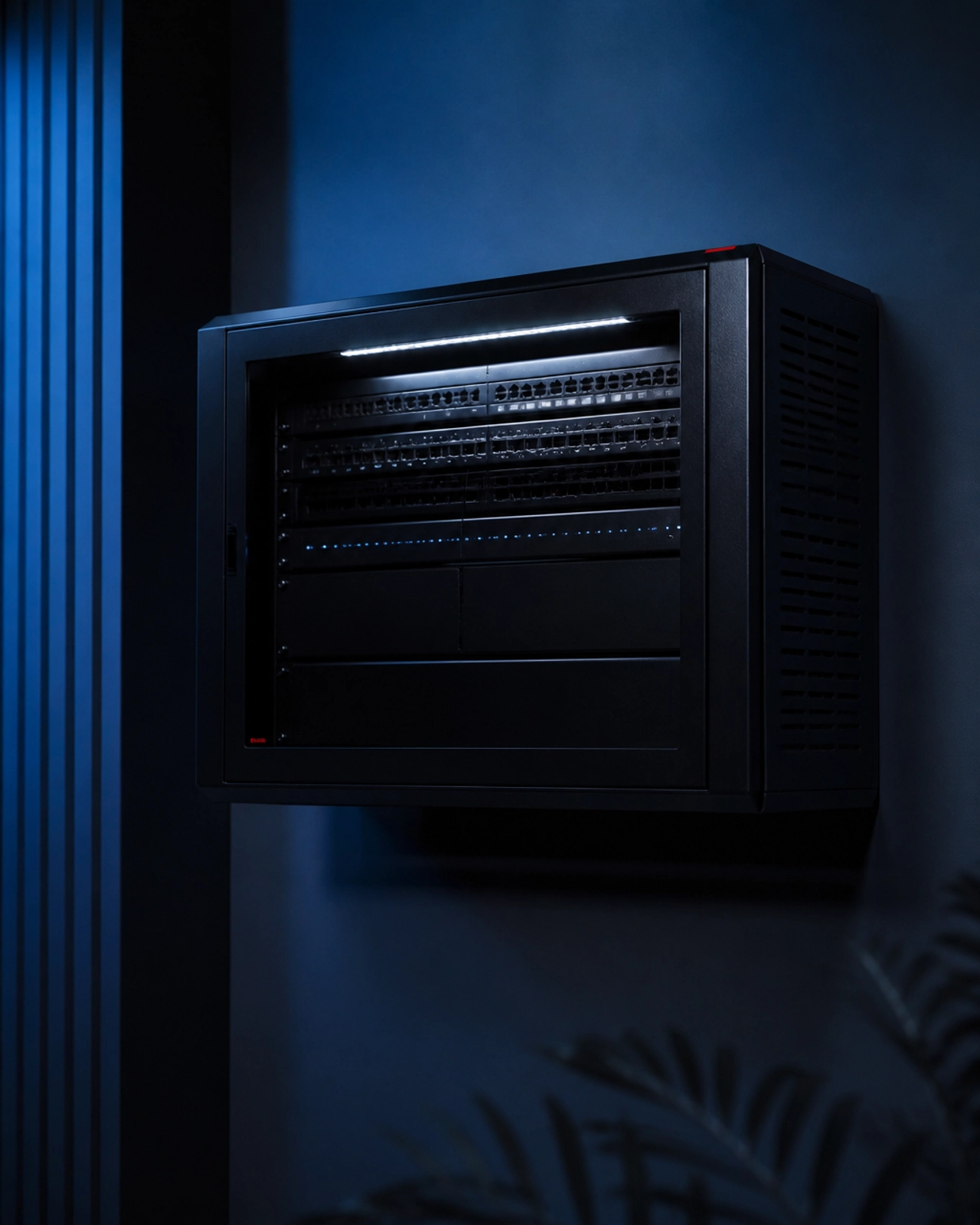
We install commercial-grade networking stacks in every office.
- Professional Wi-Fi: We use enterprise access points that cover your entire office without "dead zones."
- Security First: Our systems include advanced firewalls to protect your client data.
- Remote Monitoring: We see problems before you do. If your internet goes down, we’re already working on it.

The "White-Glove" Experience
You are busy. You have quotas to hit and claims to manage. You do not have time to compare speeds, climb under desks to reset routers, or argue with ISP billing departments.
We offer a true end-to-end service. From the moment you contact us, we take over.
- We find the best ISP at your address.
- We coordinate the install.
- We set up your secure, agency-wide network.
- We manage it forever for a single, flat monthly fee.
It’s the simplest decision you’ll make all year.

Ready to Simplify Your Agency Internet?
Don't settle for "good enough" internet. Give your agency the commercial-grade infrastructure it deserves. Let us handle the tech so you can focus on your clients.
Get started with Agent Choice Internet today.
What do State Farm agents usually ask about choosing a business ISP?
Which ISP is best for a State Farm office?
Fiber providers like AT&T Business, Verizon Fios, or local fiber utilities are almost always the best choice due to their symmetrical speeds and high reliability.
How much does managed internet cost for agents?
While prices vary by location, our service is designed to fit your State Farm stipend. Most of our agents see an out-of-pocket cost of less than $20 per month.
Do I have to buy my own equipment?
No. All equipment is leased and maintained by Agent Choice Internet. If a piece of hardware fails, we replace it at no extra cost to you.
What happens if my internet goes down?
Our team monitors your network remotely 24/7. In many cases, we can resolve issues before you even realize there is a problem. If it's an ISP outage, we handle the communication with the provider for you.
Can I keep my current ISP?
Yes. If you already have an ISP you like, we can layer our managed hardware and service on top of your existing connection to ensure your office runs smoothly and securely.
What do agents usually ask about fiber and existing connections?
Is fiber internet always the right choice for a State Farm agency?
Fiber is the best choice when it is available at your address—symmetrical speeds, excellent reliability, and future-proof capacity. If fiber is not available, business-class cable is a solid backup. The key is choosing a business-grade plan from any provider, not a residential one.
What is the difference between a residential and a business-class internet plan?
Business plans typically include a service-level agreement (SLA), faster technician response times, static IP addresses, and priority support queues. Residential plans offer no SLA and put you in a shared support pool—not suitable for an agency where downtime means lost revenue.
Should I use 5G fixed wireless as my primary agency internet connection?
Only as a last resort if neither fiber nor cable is available at your location. 5G is ideal as a failover backup—our hardware can automatically switch to a 5G circuit when your primary line drops—but wireless signals fluctuate too much for mission-critical VoIP and portal work as a primary connection.
How can I maximize my State Farm technology stipend when choosing an ISP?
Let us handle the ISP research and contract. We compare every available provider at your specific address, negotiate business terms, and structure the service so most of the cost is covered by your stipend. The majority of our agents pay less than $20 per month out of pocket.
What happens if my ISP has an outage?
When you work with Agent Choice Internet, we monitor your connection continuously and contact the ISP the moment an issue is detected. We manage the escalation so you never spend an afternoon on hold with a level-one support rep.
Are you a State Farm agent navigating this transition? Agent Choice Internet handles your entire internet setup — ISP research, commercial UniFi hardware, installation, and remote management — sized to fit SF’s $200/mo stipend. See coverage by state →
Related reading: Business Internet Service Provider Guide for State Farm Agents and Is the $60/mo Comcast Business Bundle Enough for a State Farm Agent Office?.